


Palabras clave
comunidades indígenas
sustentabilidad
energía solar
turismo sostenible
Cómo citar
Resumen
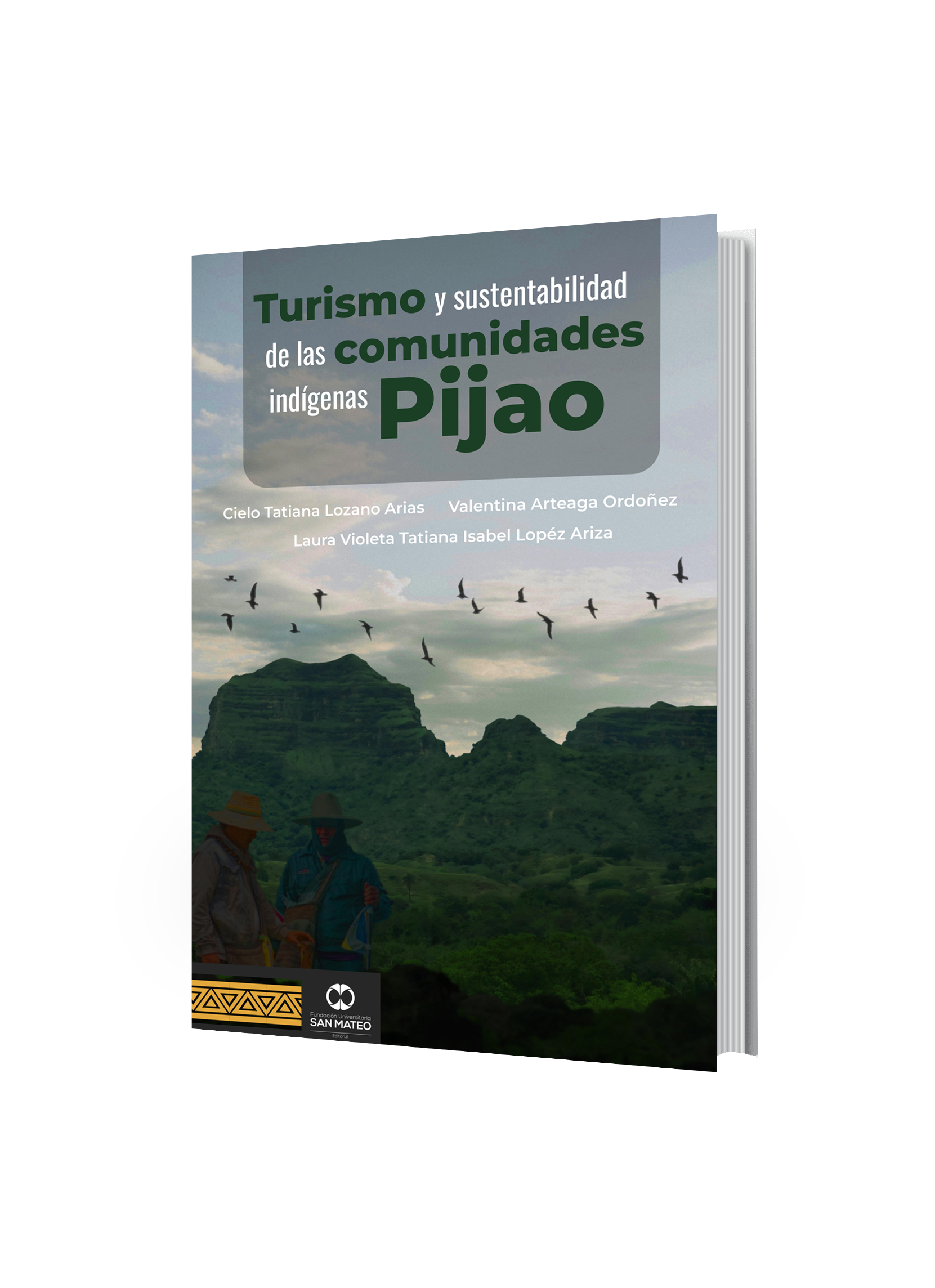
El presente libro analiza cómo el turismo en las comunidades indígenas actúa como un catalizador para fortalecer de manera colectiva su identidad cultural, a través de la preservación y práctica de sus usos y costumbres. En el contexto del posconflicto colombiano y ante los desafíos de sostenibilidad, esta dinámica impacta positivamente en las comunidades al brindarles la oportunidad de visibilizar sus prácticas cosmogónicas. Al mismo tiempo, permite a los visitantes comprender y valorar su modelo de desarrollo económico arraigado en el territorio ancestral.
Referencias
Adeola, O. (2024). Leveraging Ubuntu-inspired Values to Promote Sustainable Digital Entrepreneurship in Africa. Africa Journal of Management, 10(2), 120-149. https://doi.org/10.1080/23322373.2024.2349484
Anindhita, T. A., Zielinski, S., Milanes, C. B. G Ahn, Y. J. (2024). The Protection of Natural and Cultural Landscapes through Community-Based Tourism: The Case of the Indigenous Kamoro Tribe in West Papua, Indo-nesia. Land, 13(8), 1237. https://doi.org/10.3390/land13081237
Arango, M. (2020). Impactos de la tecnología en pérdida de la herencia oral del resguardo indígena Karmata Rúa [Tesis de maestría, Universidad Cooperativa de Colombia]. Repositorio institucional. https://reposi-tory.ucc.edu.co/server/api/core/bitstreams/b4917d98-daa3-40f5-8067-e636bc919c0c/content
Bawi, S. (2025). Revitalizing Ritual Performances for Environmental Conservation and Climate Change Adaptation: A Case Study of Ecotourism in Khaw Nu M’cung National Park, Myanmar. Forest and Society, 9(1), 48-69.
Beetson, S., Pradhan, S., Gordon, G. y Ford, J. (2020). Building a Digital En-trepreneurial Platform Through Local Community Activity and Digital Skills with Ngemba First Nation, Australia. International Indigenous Policy Journal, 11(1). https://doi.org/10.18584/iipj.2020.11.1.10211
Bhushan, S., Dincă, I. G Shikha, S. (2024). Evaluating Local Livelihoods, Sus-tainable Forest Management, and the Potential for Ecotourism Deve-lopment in Kaimur Wildlife Sanctuary, India. Frontiers in Forests and Global Change, 7. https://doi.org/10.3389/ffgc.2024.1491917
BID. (2018). Turismo indígena: oportunidad para el desarrollo sostenible. https://publications.iadb.org/es/turismo-indigena-oportunidad-pa-ra-el-desarrollo-sostenible
Bonina, C., Koskinen, K., Eaton, B. G Gawer, A. (2021). Digital Platforms for Development: Foundations and Research Agenda. Information Systems Journal, 31(6), 869-902. https://doi.org/10.1111/isj.12326
Borcoman, M. G Sorea, D. (2023). Ethnic Soups from Rupea Area (Romania) as Resources for Sustainable Local Development. Sustainability, 15(2).
Bunten, A. (2014). Indigenous Tourism Across the Paciflc-Cultural Tourism Workshop. Simon Fraser Repository. https://summit.sfu.ca/item/16109 Carr, A., Ruhanen, L. G Whitford, M. (2016). Indigenous Peoples and Tourism: The Challenges and Opportunities for Sustainable Tourism. Journal of Sustainable Tourism, 24(8-9), 1067-1079. https://doi.org/10.1080/09669582.2016.1206112
Castells, M. (2009). The Rise of the Network Society: The Information Age: Economy, Society, and Culture (2nd ed., Vol. 1). Wiley-Blackwell.
Chen, C.-C., Chook, J., Nguyen, L. G Lee, C. (2024). Integrating Locals’ Importance–Performance Perception of Community Resilience into Sustainable Indigenous Tourism Management. Sustainability, 16(12). https://doi.org/10.3390/su16125070
Convención para la Salvaguardia del Patrimonio Cultural Inmaterial. 17 de octubre de 2003.
Convenio núm. 169 sobre Pueblos Indígenas y Tribales. 27 de junio de 1989.
Corbett, J., Bastien, F., Chung, A. G Harrison, H. (2023). Infusing Lived Experiences into Digital Innovation: A Conversational Inquiry with Indigenous Entrepreneurs. ACIS 2023 Proceedings, 38. https://aisel.aisnet.org/acis2023/38/
Declaración de las Naciones Unidas sobre los Derechos de los Pueblos Indígenas. 13 de diciembre de 2007. https://www.un.org/esa/socdev/unpfii/ documents/DRIPS_es.pdf
Dinh, T. G Thi, H. (2024). Models of Residential Space for Ethnic Minorities in Thanh Hoa Province Associated with Sustainable Livelihoods. Heritage and Sustainable Development, 6(1), 127-144.
Dirección de Poblaciones. (2009). Coyaima Natagaima (Pijao). En Caracterizaciones de los pueblos indígenas de Colombia. Ministerio de Cultura.
Domínguez, K., León-González, J. y Hernández, A. (2024). Revisión de literatura en torno a los emprendimientos sustentables. Un panorama global en el turismo. El Periplo Sustentable: Revista de Turismo, Desarrollo y Competitividad, (46), 220-243.
FAO. (s.f.). Cultura y tradiciones alimentarias. https://www.fao.org/agroecology/overview/the-10-elements-of-agroecology/cultu-re-and-food-traditions/es
Feng, H. G Xiao, J. (2024). (Re)shaping the Tourists’ Imagined Identity of Mosuo towards Sustainable Ethnic Tourism Development in Southwest China. Sustainability, 16(16). https://doi.org/10.3390/su16167042
Fortenberry, B. (2021). Heritage Justice, Conservation, and Tourism in the Greater Caribbean. Journal of Sustainable Tourism, 29(2-3), 253-276.
Freitag, A. G Camargo-Borges, C. (2024). The Digital Bow: Exploring the Potential of Digital Presence for Indigenous Community-Based Tourism in Brazil. Tourism Planning and Development, 21(6), 755-772.
Fundación PIEB. (2014). Turismo comunitario en Bolivia: perspectivas y desafíos. Fundación PIEB.
Gao, J., Lin, H. G Zhang, C. (2020). Locally Situated Rights and the ‘Doing’ of Responsibility for Heritage Conservation and Tourism Development at the Cultural Landscape of Honghe Hani Rice Terraces, China. Journal of Sustainable Tourism, 29(2-3), 193-213.
Gascón, J. (1999). Gringos como en sueños. Diferenciación y conflicto campesino en el sur andino peruano ante el desarrollo de un nuevo recurso el turismo. Isla de Amantani, lago Titicaca [Trabajo de monografía, Universitat de Barcelona]. Repositorio institucional. https://portalciencia. ull.es/documentos/63930baf7a05941066fa8574
Getino, O. (1987). Turismo y desarrollo en América Latina. Editorial Limusa.
Ghosh, A., Kisku, A. G Chakrabarty, P. (2024). Proposing Tribal Heritage Protection through Ethnotourism: A Study on Disom Sendra Festival of Ajodhya Hills in India. Journal of Sustainability Research, 6(2).
Gómez, A. (2019). Tecnologías de la información, emprendimiento y desarrollo territorial en Chilpancingo, 2018 [Tesis de maestría, Universidad Autónoma de Guerrero]. Repositorio institucional. http://ri.uagro.mx/handle/uagro/2604
Hai, N. G Ngan, N. (2022). Factors Affecting Community Participation in Khmer Festival Tourism Development in Mekong Delta, Vietnam. Geojournal of Tourism and Geosites, 44(4), 1482-1490.
Haines, J., Du, J. G Trevorrow, A. (2022). Cultural Use of ICT4D to Promote Indigenous Knowledge Continuity of Ngarrindjeri Stories and Com-munal Practices. Journal Of the Association for Information Science and Technology, 74(12), 1449-1462. https://doi.org/10.1002/asi.24710
Hamdani, M., Erlina G Rujiman. (2023). Development of Tourism Area Based on Local Wisdom Based on Evaluation of Regional Development in Karo Regency by Using Quantitative Strategic Planning matrix (QSPM) method. IOP Conference Series Earth and Environmental Science.
He, J. G Mai, T. (2021). The Circular Economy: A Study on the Use of Airbnb for Sustainable Coastal Development in the Vietnam Mekong Delta. Sustainability, 13(13).
Hinch, T. G Butler, R. (1996). Tourism and Indigenous Peoples: Issues and Implications. Butterworth-Heinemann.
IDEAM. (2017). Atlas de radiación solar, ultravioleta y ozono de Colombia. IDEAM.
IEA. (2019). Energy Access Outlook 2019: From Poverty to Prosperity. IEA. IEEE. (2017). IEEE Standard for Local and Metropolitan Area Networks--Bridges and Bridged Networks (IEEE Std 802.1Q-2017). IEEE Xpore. https://doi.org/10.1109/IEEESTD.2018.8403927
IRENA. (2020). Renewable Energy Statistics 2020. IRENA.
IRENA. (2021). Renewable Power Generation Costs in 2020. International Renewable Energy Agency.
ITU. (2020). ICT Facts and Figures 2020. ITU Publications.
Kuklina, M., Trufanov, A., Krasnoshtanova, N., Urazova, N., Kobylkin, D. G Boga-tyreva, M. (2021). Prospects for the Development of Sustainable Tourism in the Okinsky District of the Republic of Buryatia. Sustainability, 13(14).
Montalvo, A. (2011). El turismo comunitario como alternativa sustentable de desarrollo para tres comunidades kichwa del alto napo de la región amazónica ecuatoriana (rae). Un análisis desde los arreglos socioeconómicos y el territorio [Tesis de maestría, Facultad Latinoamericana de Ciencias Sociales]. Repositorio institucional. https://repositorio.flacsoandes.edu.ec/server/api/core/bitstreams/5441acd3-36d7-4341-b6d8-c65bb669eb01/content
Montoya, M. (2013). Turismo comunitario y desarrollo rural: interacciones y escalamiento de innovaciones. IEP.
Marlina, Sumarmi, Astina, I. G Utomo, D. (2022). Traditional Value of Using Cave Water for Sustainable Ecotourism in Wakatobi Regency, Indonesia. Geojournal of Tourism and Geosites, 41(2), 621-627.
Mongird, K., Viswanathan, V., Balducci, P., Alam, J., Fotedar, V., Koritarov, V. G Hadjerioua, B. (2019). Energy Storage Technology and Cost Characterization Report (PNNL-28866). Pacific Northwest National Laboratory.
Montoya, J. (2022). La fabricación del enemigo: los indios pijaos en el Nuevo Reino de Granada, 1562-1611. Trashumante. Revista Americana de Historia Social, 19, 96-117. https://doi.org/10.17533/udea.trahs.n19a05
Mora, J. (2020). Gastronomía, patrimonio cultural inmaterial en la gestión del turismo local. En R. Gutiérrez (Comp.), El turismo gastronómico sostenible. Ruta Bochica. Potencialidades y modelo pedagógico para su desarrollo en Colombia (pp. 28-50). Fundación Universitaria San Mateo.
OMT. (2005). Indicadores de desarrollo sostenible para los destinos turísticos. Guía práctica. OMT.
Parhankangas, A. G Colbourne, R. (2022). Indigenous Entrepreneurship and Venture Creation: A Typology of Indigenous Crowdfunding Cam-paigns. Entrepreneurship Theory And Practice, 47(5), 1617-1659. https://doi.org/10.1177/10422587221096907
Parthiban, R., Sun, R., Qureshi, I. G Bandyopadhyay, S. (2024). Empowering Rural Micro-Entrepreneurs Through Technoficing: A Process Model for Mobilizing and Developing Indigenous Knowledge. The Journal of Strategic Information Systems, 33(2). https://doi.org/10.1016/j.jsis.2024.101836
Pedersen, A. (2005). Gestión del turismo sostenible en sitios del patrimonio mundial: manual práctico para administradores de sitios del patrimonio mundial. UNESCO. https://whc.unesco.org/document/165853
Pettersson, R., G Müller, D. K. (2023). Museums Portraying Indigenous Heritage: The Case of Sámi Museums in Sweden. Journal of Heritage Tourism, 18(2), 184-201.
Pi-Sunyer, O. (2001). Tourism on the Maya Periphery. En V. Smith G Maryann, B. (Eds.), Hosts and Guests Revisited: Tourism Issues of the 21st Century. (pp. 122-140.). Cognizant.
Pocock, C., Collett, D. G Knowles, J. (2024). False Promise: World Heritage, Ecotourism, and the Local Community of Strahan, Tasmania. Herita-ge, 7(2), 1028-1042. https://www.scopus.com/inward/record.uri?ei-d=2-s2.0-85187307290Gdoi=10.3390%2fheritage7020050GpartnerI-D=40Gmd5=81304102fd244ba1664e4796e28e7029
Promperú. (2001). Productos turísticos sostenibles: experiencias en el Perú. Promperú.
Pubill, A. G Buzinde, C. (2021). Indigenous Self-Representations in the Touristic Sphere. Annals of Tourism Research, 86. https://doi.org/10.1016/j.annals.2020.103099
Qu, C., Zhang, C., Shen, S. G Olsen, D. (2023). Heritage Conservation and Communities’ Sense of Deprivation in Tourism: The Case of the Hani Community in Yunnan, China. Tourism Geographies, 25(2-3), 881-898.
Quintana, M. (2021). Turismo en los pueblos indígenas de Colombia. Universidad de Bogotá Jorge Tadeo Lozano.
Rappaport, J. (2005). Intercultural Utopias: Public Intellectuals, Cultural Experimentation, and Ethnic Pluralism in Colombia. Duke University
Press. Samal, R. G Dash, M. (2025). From Strengths to Strategies: Mapping the Sustainable Path for Ecotourism in Chilika Wetland Through SWOT-QSPM Analysis. Journal for Nature Conservation, 84.
Santafe-Troncoso, V. G Loring, P. (2021). Traditional Food or Biocultural Threat? Concerns About the Use of Tilapia Fish in Indigenous Cuisine in the Amazonia of Ecuador. People and Nature, 3(4), 887-900. https://doi.org/10.1002/pan3.10235
Sarmiento, F., Bush, M., McMichael, C., Chávez, C., Cruz, J., Rivas-Torres, G., Kavoori, A., Weatherford, J. G Hunt, C. (2024). Ecological Legacies and Ethnotourism: Bridging Science and Community in Ecuador’s Amazonia. Sustainability, 16(11). https://doi.org/10.3390/su16114664
Stojanović, T., Trišić, I., Brđanin, E., Štetić, S., Nechita, F. G Candrea, A. (2024). Natural and Sociocultural Values of a Tourism Destination in the Func-tion of Sustainable Tourism Development—An Example of a Protected Area. Sustainability, 16(2). https://doi.org/10.3390/su16020759
Suárez, A. (2024). Turismo Comunitario Y Sostenible: Una Revisión De Iniciativas Exitosas En Países En Desarrollo. Ciencia Latina Revista Científica Multidisciplinar, 8(5), 8469-8494.
Suyadnya, I., Prianti, D., Kanto, S. G Putra, I. (2025). The Local Dynamics of Global Ecotourism Trend in the Old Balinese Village, Indonesia. Cogent Arts and Humanities, 12(1).
The International Ecotourism Society. (s.f.). What is Ecotourism? https:// ecotourism.org/what-is-ecotourism/
Torres, N., Reyes, J., Vásquez, V. y Van’t Hooft, A. (2024). El turismo en áreas naturales protegidas. Elementos para el desarrollo etnoturístico en las reservas de la biosfera de México: una revisión bibliográfica. Cuadernos de Turismo, (53), 215-241.
Warnholtz, G., Ormerod, N. G Cooper, C. (2022). The Use of Tourism as a Social Intervention in Indigenous Communities to Support the Conservation of Natural Protected Areas in Mexico. Journal of Sustainable Tourism, 30(11), 2649-2664.
Young, J. (2019). Rural Digital Geographies and New Landscapes of Social Resilience. Journal Of Rural Studies, 70, 66-74. https://doi.org/10.1016/j.jrurstud.2019.07.001
Zorn, E. G Farthing, L. (2007). Communitarian Tourism Hosts and Mediators in Peru. Annals of Tourism Research, 34(3), 673-689.
Zubi, G., Dufo-López, R., Carvalho, M. G Pasaoglu, G. (2018). The Li-thium-ion Battery: State of the Art and Future Perspectives. Renewable and Sustainable Energy Reviews, 89, 292-308. https://doi.org/10.1016/j.rser.2018.03.002

Esta obra está bajo una licencia internacional Creative Commons Atribución-NoComercial-SinDerivadas 4.0.
Derechos de autor 2026 Fundación Universitaria San Mateo